
Science, Pseudoscience, and Fantastic Archaeology
Fantastic and Fallacious Archaeology: Part One

On June 3rd, 2001 Disney’s Atlantis: The Lost Empire released in theatres. I still remember standing in line to get popcorn with my grandmother before the movie, and the feeling of excitement as our awkward and charming protagonist Milo Thatch journeyed into the unknown to discover the lost land of Atlantis. I was entranced, and went home to immediately start creating my own alphabet to mimic the Atlantean script from the movie and imagine myself discovering some lost, undiscovered world. This sparked a curiosity for ancient cities and cultures that has continued to this day, as I’m sure media and myth has done centuries surrounding lost civilizations of antiquity.
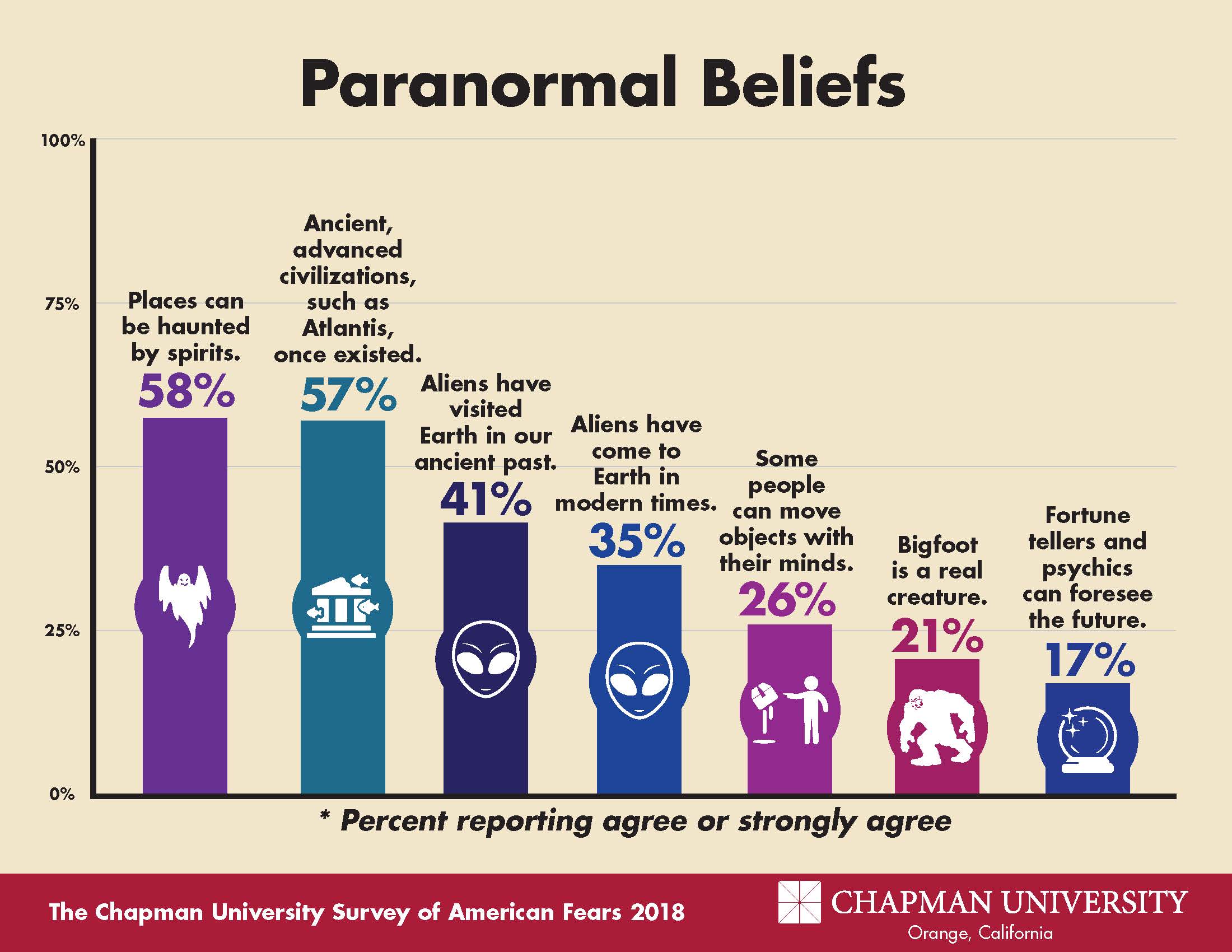
Although this curiosity has always been there, pseudoarcheology has been given a major platform in recent years with its attempts to interpret the unknown with non-credible theories, often ignoring or misunderstanding the empirical evidence gathered throughout the discipline of archaeology. The 2018 Survey of American Fears by Chapman University found that 57% of their respondents believed that ancient advanced civilizations such as Atlantis existed, a 17% increase from their 2016 study.
Science correspondent Lizzie Wade discusses this very topic in her article Believe in Atlantis? These archaeologists want to win you back to science, where she and other researchers discuss the rising beliefs of ancient aliens and otherworldly advanced societies, and the dangers that these beliefs hold in more than just our understanding of the past. In February of 2019 on his podcast The Joe Rogan Experience, host Joe Rogan referenced a famous carving of Mayan King K’inich Janaab’ Pakal from his death in 683 C.E., claiming it depicts him taking off in a spaceship, then asking what archaeologists made of it.
Archaeologists, like David Anderson of Radford University, used this as an opportunity and call to action to educate and denounce how these ideas ignore the cultural context of ancient artifacts to fit the interpreter’s confirmation bias rather than testing hypotheses and gathering reliable evidence. Wade also references Chapman University’s Survey of American Fears, showing the major increase in Americans’ belief of pseudoarchaeological ideas, with Anderson stating the Society for American Archaeology (SAA) and others in the archaeology field needs to do a better job of speaking out.

A great example of this is when Semir “Sam” Osmanagic, a Houston-based Bosnian-American contractor, believed he had discovered the world’s oldest pyramids in the Balkans while visiting Bosnia in 2005. He is credited in the media to have spent 15 years studying the pyramids of Latin America, but if you look at his book The World of the Maya you’ll find an “alternative history” along with Osmanagic’s belief that the Maya’s ancestors came from the Pleiades star cluster and first arrived at Atlantis and Lemuria, creating an advanced civilization. This self-proclaimed archaeologist has been accepted as a legitimate researcher by many major news outlets and has been given a platform to reach people far and wide, only spreading misinformation. One of my biggest pet peeves is when alien-believers use ancient advancement as a sign that we have met some kind of higher lifeform that gave us the knowledge we have today: It completely undermines the beauty of human ingenuity and ability to think creatively and effectively. Not only does this reflect poorly on the ancient indigenous peoples of this region, but it makes claims that are completely unsupported by any kind of factual evidence.
Anthony Harding, president of the European Association of Archaeologists, wrote to the editors of these media outlets, “The situation of professional heritage management in Bosnia-Herzegovina is, since the Bosnian war, in a poor state, with a tiny number of people trying to do what they can to protect their rich heritage from looting and unmonitored or unauthorized development. It adds insult to injury when rich outsiders can come in and spend large sums pursuing their absurd theories (the construction of a colossal pyramid so large that it dwarfs even those of Egypt or Mesoamerica? 12,000 years ago?), in ways that most other countries would never countenance, instead of devoting their cash to the preservation of the endangered genuine sites and monuments in which Bosnia-Herzegovina abounds.” Archaeologists fear that Osmanagic could damage real sites around the hill he is excavating with little to no training. A former director of the National Museum in Sarjevo said, “This is the equivalent of letting me, an archaeologist, perform surgery in hospitals.”

But is it only because of a love for the extraterrestrial and occult? Programs like Ancient Aliens and Netflix’s Ancient Apocalypse explore the supernatural and unknown, feeding into conspiracies that grab the attention of curious individuals. It makes money, with an eye-catching title and idea, Hollywood is able to make much more than a lecture or published study that unfortunately are often inaccessible to those outside of the field, but there is also something deeper to these theories. Seemingly harmless and fantastical, the reality is often rooted in racism: a western colonizer mentality based on the assumption that ancient non-European societies weren’t capable of inventing sophisticated architecture, calendars, math, and sciences like astronomy on their own. “It’s racist at its core,” says archaeologist Kenneth Feder from Central Connecticut State University, and I have to say, I am inclined to agree more often than not.
We have seen this on major scales with the Nazi party exploiting archaeology through the Ahnenerbe, a branch of the SS founded by Heinrich Himmler in 1935 to research ancient cultures and practices, to further their ideas of eugenics and nationalism, altering archaeological data to subdue research and cultural policy within the Nazi regime. This obsession with religious artifacts and the occult led to the disturbance of many heritage sights all over Europe, Anatolia, North Africa, and Central and West Asia. In popular culture, we have seen the Ahnenerbe portrayed in movies like Raiders of the Lost Ark, showcasing the obsession the Nazi’s had with the occult and other religious paraphernalia. Although Indy’s adventure to recover the Ark of the Covenant may have been fictional, there were several religious artifacts that Hitler went after such as the Spear of Destiny, which is the alleged lance that the Roman soldier Longinus used to pierce the side of Jesus while was crucified.
Archaeologist Stephanie Halmhofer criticizes the rise of pseudoarchaeological theories, like ancient aliens, in her article Did Aliens Build the Pyramids? And Other Racist Theories and how these theories revolving around Atlantis, Aryans, or extraterrestrials are not just fantastical, but dangerously rooted in racism and white supremacist ideology. These narratives consistently undermine the achievements of Native and Indigenous peoples by implying they couldn’t have created their own civilizations. While presenting themselves as alternative truths, such theories conveniently rewrite history through the colonial western lens and have been embraced by white nationalist groups to support their dangerous “great replacement” conspiracy theories. Halmhofer argues that both the public and professional disciplines must actively challenge these narratives and prioritize marginalized voices in shaping their own histories.
I think there are ways to further explore and understand the mysteries around us without dehumanizing or demoralizing the subject being studied, or at least how we come to understand the unknown through the past. I recently started reading a book by one of my favorite academics, The First Ghosts: Most Ancient of Legacies by Irving Finkel. Finkel is an English philologist and Assyriologist, and is currently working as the Assistant Keeper of Ancient Mesopotamian script, languages and cultures in the Department of the Middle East in the British Museum. I personally have a lot of interest in the Ancient Near East and the etymology of language there, branching into early religion and society in the region, and have listened to many lectures that Finkel has given on his cuneiform tablets, Babylonian maps, and read his book The Ark Before Noah: Decoding the Story of the Flood a few years ago.
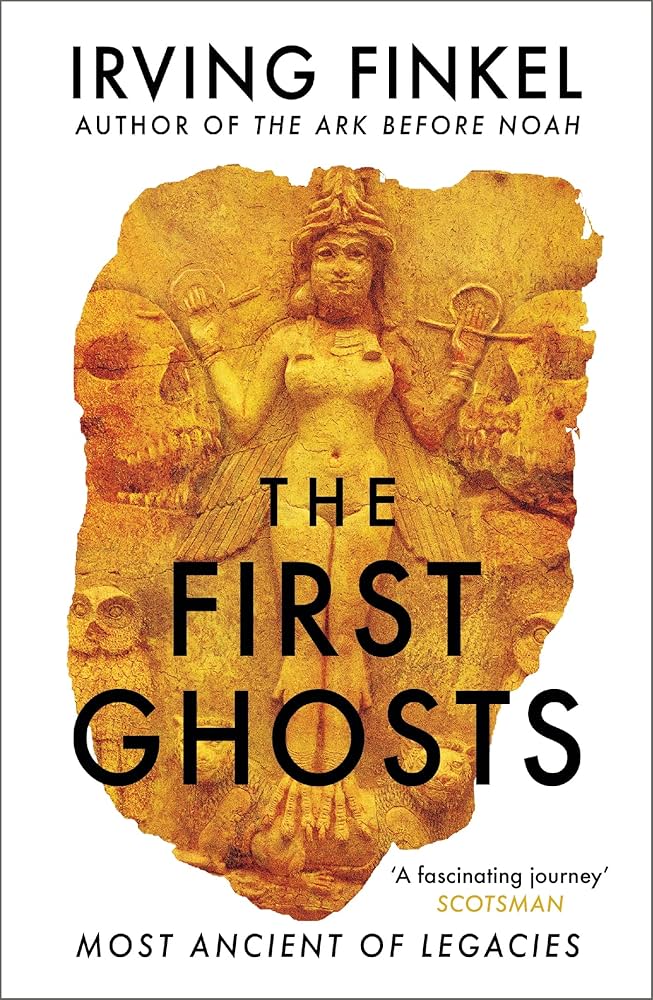
In his newest book, Finkel draws on a wide range of cuneiform sources from ancient Mesopotamia to piece together the earliest evidence for the presence of ghosts in human life in early civilization. He isn’t trying to prove necessarily whether ghosts are real or not, but how people in ancient Mesopotamia understood and interacted with ghosts and the supernatural in their day-to-day lives. It is incredibly informative, going into depth about the way people interacted with the dead, as well as how society viewed death and beyond in this time. Although this doesn’t “prove” that ghosts exist in the physical sense, I do think this gives us a window into the cultural practices and beliefs from the cradle of civilization, closing the gap of unfamiliarity with the past, which is pretty incredible. I would love to talk more in depth about this book and the nuances behind it, it’s really really interesting!
Works Cited/References/Acknowledgements
Chapman University. Chapman University Survey of American Fears 2018: Paranormal Beliefs [Bar Graph Image]. 2018, Chapman University Wilkinson College, https://www.chapman.edu/wilkinson/research-centers/babbie-center/_files/fear-2018/2018-fear-survey-paranormal-bar-graph.jpg
Wilkinson College. “America’s Top Fears 2018: Chapman University Survey of American Fears.” The Voice of Wilkinson, 16 Oct. 2018, https://blogs.chapman.edu/wilkinson/2018/10/16/americas-top-fears-2018/
Wade, Lizzie. “Believe in Atlantis? These Archaeologists Want to Win You Back to Science.” Science, 9 Apr. 2019,https://www.science.org/content/article/believe-atlantis-these-archaeologists-want-win-you-back-science
Rodriguez, Marcellina. “Pakal the Great & Xibalba.” World History Encyclopedia, 26 Oct. 2014, https://www.worldhistory.org/image/3202/pakal-the-great–xibalba/
Rose, Mark. “The Bosnia-Atlantis Connection.” Archaeology Magazine Archive, Archaeological Institute of America, 27 Apr. 2006, https://archive.archaeology.org/online/features/osmanagic/
Radford, Benjamin. “’Lost’ City of Atlantis: Fact & Fable.” Live Science, 1 Mar. 2018, https://www.livescience.com/23217-lost-city-of-atlantis.html
“Nazi Myths Debunked: Hitler, Wagner and the Spear of Destiny.” All About History, History of War, Future Publishing, 5 July 2017, https://www.historyanswers.co.uk/history-of-war/nazi-myths-debunked-hitler-wagner-and-the-spear-of-destiny/
“Myth Hunters | Episode 1: Hitler & the Spear of Destiny.” YouTube, uploaded by Myth Hunters, video, https://youtu.be/MFUcAqEHz7Q?si=nFrBsB-1o791-jV1
Halmhofer, Stephanie. “Did Aliens Build the Pyramids? And Other Racist Theories.” SAPIENS, 5 Oct. 2021, https://www.sapiens.org/archaeology/pseudoarchaeology-racism/
“Irving Finkel: The First Ghosts: Most Ancient of Legacies.” The Paideia Institute, 27 Oct. 2024, https://www.paideiainstitute.org/the_first_ghosts_most_ancient_of_legacies




Leave a Reply